Logarithms, Exponents and Surds formulas
At a glance
aᵐ × aⁿ = aᵐ⁺ⁿ    aᵐ ÷ aⁿ = aᵐ⁻ⁿ    (aᵐ)ⁿ = aᵐⁿ    a⁻ⁿ = 1/aⁿ
compare powers: match the index (HCF) or the base
1/(√a − √b) = (√a + √b)/(a − b)
log_b x = y ⟺ bʸ = x;   x > 0, b > 0, b ≠ 1
log xy = log x + log y    log xⁿ = n log x
log_a b = log b / log a    log_a b × log_b a = 1
digits of N = ⌊log N⌋ + 1     log 2 ≈ 0.301   log 3 ≈ 0.477   log 7 ≈ 0.845
Laws of indices
aᵐ × aⁿ = aᵐ⁺ⁿ        aᵐ ÷ aⁿ = aᵐ⁻ⁿ        (aᵐ)ⁿ = aᵐⁿ
a⁰ = 1        a⁻ⁿ = 1 / aⁿ        a^(1/n) = ⁿ√a
(ab)ⁿ = aⁿbⁿ        a^(p/q) = (q-th root of a)ᵖ
Shortcut: Rewrite everything as powers of one small base: 4, 8, 16, 32 are powers of 2; 9, 27, 81 are powers of 3. Then just compare the indices.
Comparing giant powers
Shortcut: Same index: the bigger base wins. Same base (above 1): the bigger index wins. Your job is to force one of these.
Surds and rationalising
√(ab) = √a × √b        √(a/b) = √a / √b
1 / (√a − √b) = (√a + √b) / (a − b)
(√a + √b)² = a + b + 2√(ab)
Shortcut: Find two numbers with sum a and product b. For √(5 + 2√6): 3 + 2 = 5 and 3 × 2 = 6, so it is √3 + √2.
A log is just a power
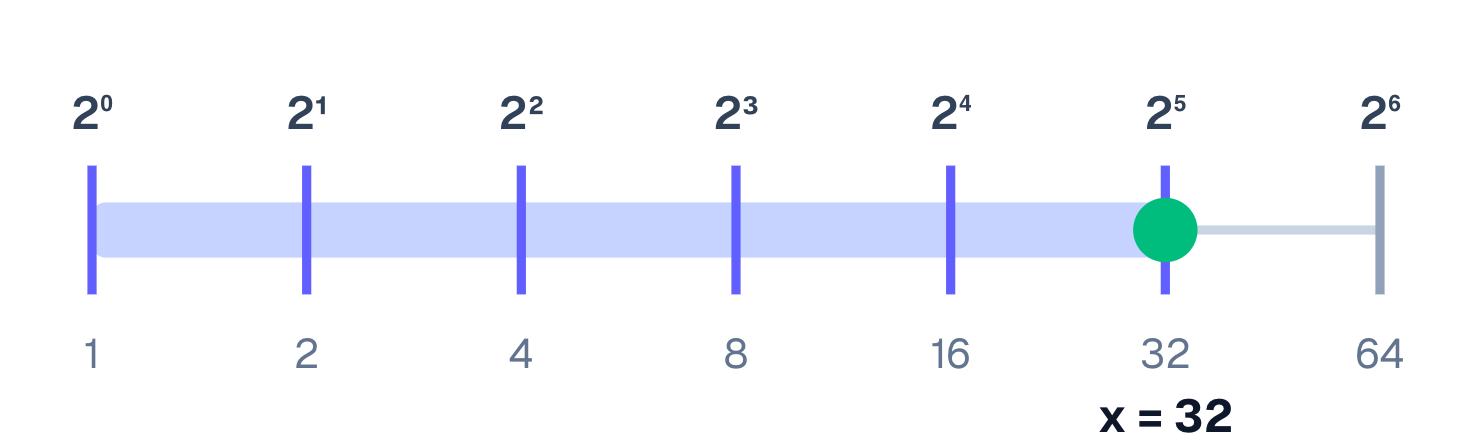
log_b x = y   means   bʸ = x
log_b 1 = 0        log_b b = 1        b^(log_b x) = x
Log laws: multiplying becomes adding
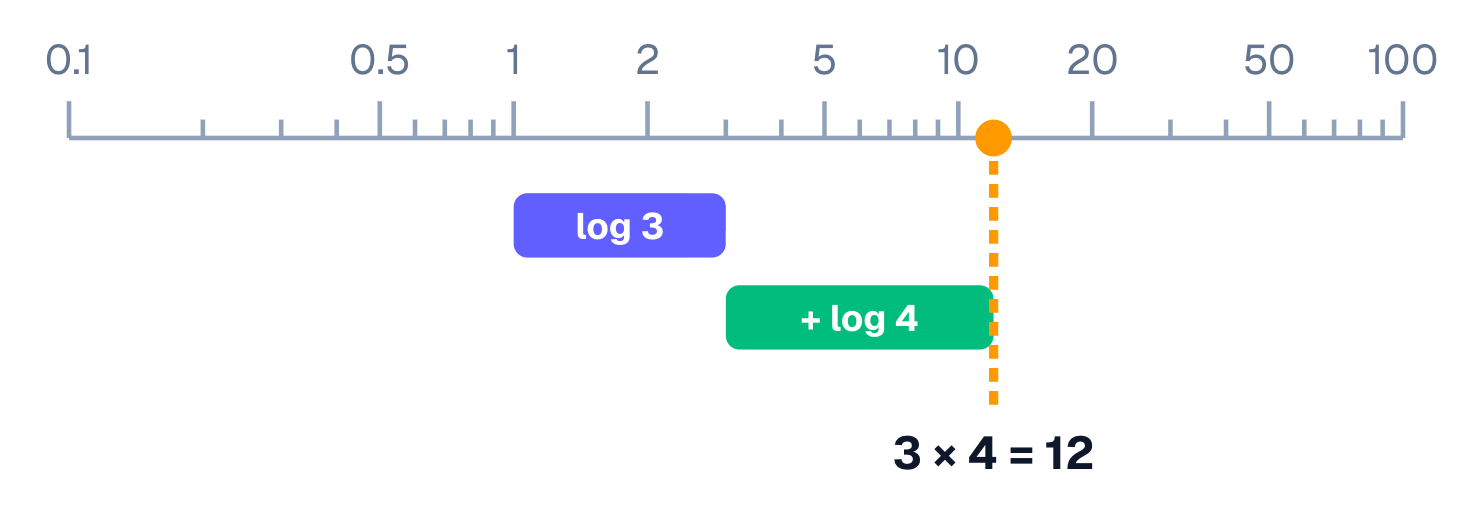
log(xy) = log x + log y
log(x/y) = log x − log y
log(xⁿ) = n log x        log_(bᵏ) x = (1/k) log_b x
Shortcut: log 5 = log (10/2) = 1 − log 2 = 0.699. With log 2, log 3 and log 10 = 1 you can build the log of any number made of 2, 3 and 5.
| n | log n | Built from |
|---|---|---|
| 2 | 0.3010 | memorise |
| 3 | 0.4771 | memorise |
| 4 | 0.6021 | 2 log 2 |
| 5 | 0.6990 | 1 − log 2 |
| 6 | 0.7782 | log 2 + log 3 |
| 7 | 0.8451 | memorise |
| 8 | 0.9031 | 3 log 2 |
| 9 | 0.9542 | 2 log 3 |
Change of base
log_a b = log_c b / log_c a   (any base c)
log_a b × log_b a = 1
log_a b × log_b c × log_c d = log_a d
a^(log_b c) = c^(log_b a)
Shortcut: In a product of logs where each argument is the next base, everything in the middle cancels: log₂ 3 × log₃ 4 × … × log₆₃ 64 = log₂ 64 = 6.
Characteristic and number of digits
digits of N = ⌊log N⌋ + 1
for 0 < x < 1: zeros after the decimal point = −⌊log x⌋ − 1
Shortcut: The decimal part (mantissa) gives the first digits: log 2⁶⁴ = 19.266, and 10^0.266 ≈ 1.84, so 2⁶⁴ starts 184…
Formulas stick when you use them
The Logarithms, Exponents and Surds lesson has worked problems and quick checks for every formula here. Free to start.
Start free