Algebra
Functions and Graphs formulas
At a glance
domain: no √(negative), no ÷ 0, log only of positives
f(g(x)): g first.   f⁻¹: swap x and y, mirror in y = x
even: f(−x) = f(x)   odd: f(−x) = −f(x)
a·f(x − h) + k: right h, up k, stretch a;   f(−x): flip in y-axis   −f(x): flip in x-axis
|f(x)| folds up;  f(|x|) mirrors the right half
min of max(rising, falling) at the crossing
a + b ≥ 2√(ab), equality at a = b
Composite functions
Shortcut: When asked for f applied many times, compute f(x), f(f(x)), f(f(f(x))) and look for a repeat. With f(x) = 1/(1 − x), three steps bring you back to x.
Inverse functions
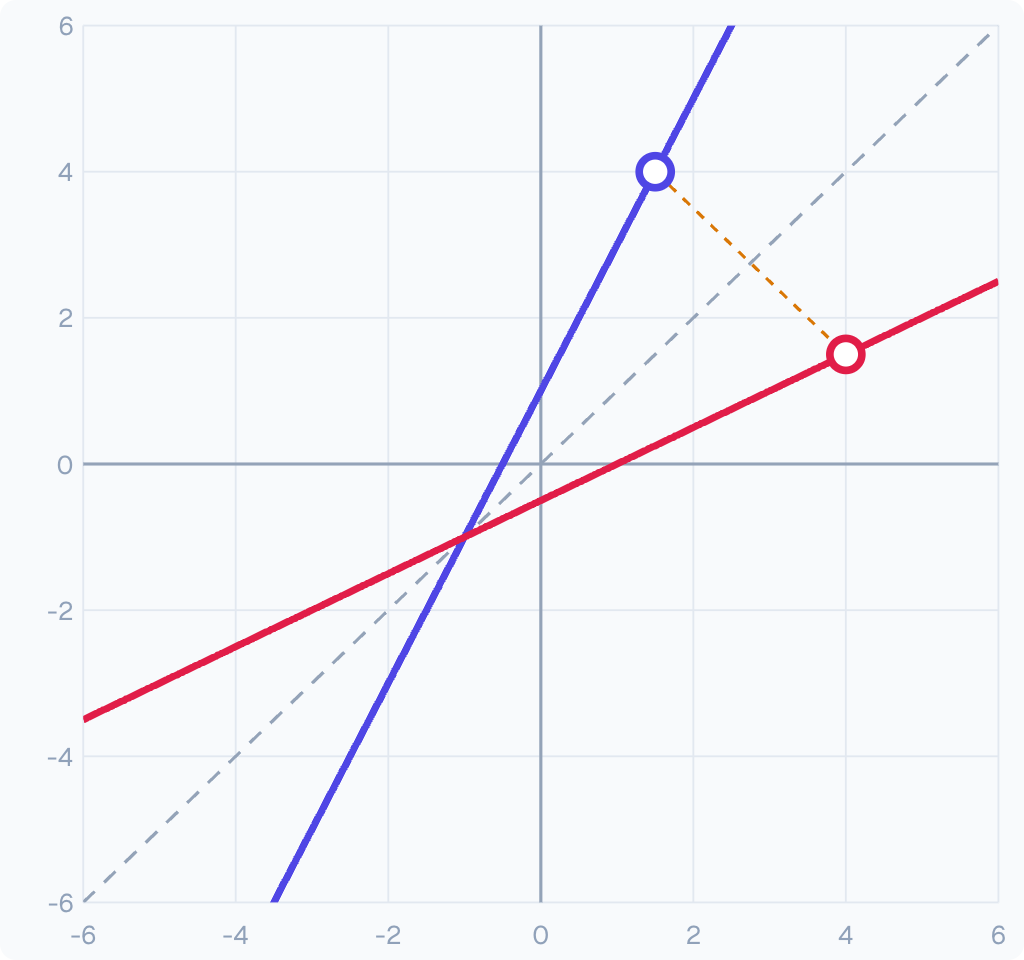
1. write y = f(x)
2. solve for x in terms of y
3. swap the letters: f⁻¹(x)
Shortcut: f(x) = (ax + b)/(cx − a) is its own inverse: its graph is symmetric about y = x. Spot the −a and skip the algebra.
Even and odd functions
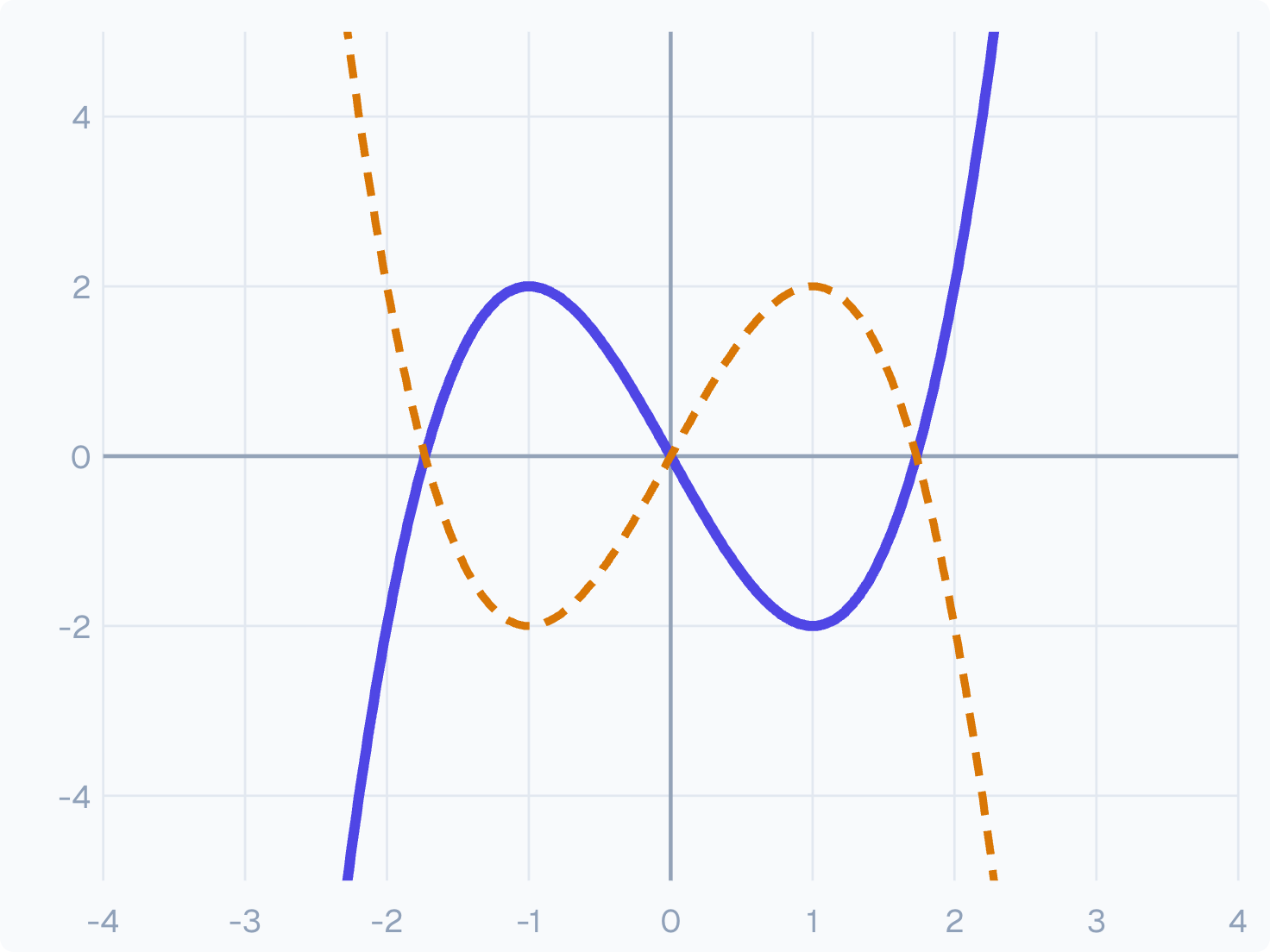
even: f(−x) = f(x), mirror in the y-axis     odd: f(−x) = −f(x), half-turn about the origin
even × even = even     odd × odd = even     even × odd = odd
even + even = even     odd + odd = odd      even + odd = neither (usually)
Shifting, stretching, reflecting
| Graph of | What happens |
|---|---|
| f(x) + k / f(x) − k | Shifts up k / down k |
| f(x − h) / f(x + h) | Shifts right h / left h |
| a·f(x) | Stretches vertically by a (squashes if 0 < a < 1) |
| f(ax) | Squeezes horizontally by a factor a (stretches if 0 < a < 1) |
| −f(x) | Reflects in the x-axis |
| f(−x) | Reflects in the y-axis |
| |f(x)| | Folds the part below the x-axis up |
| f(|x|) | Drops the left half; mirrors the right half into it |
| f⁻¹(x) | Reflects in the line y = x |
Changes inside the bracket act on x and work backwards; changes outside act on y and work as they read.
max() and min() of functions
Shortcut: Smallest value of max(rising line, falling line) = the value where they are equal. Same for the largest value of min(…). Solve f = g and stop.
Maxima and minima with AM ≥ GM
a + b ≥ 2√(ab)          (a, b > 0)
a + b + c ≥ 3·∛(abc)
fixed product → least sum at equality
fixed sum → greatest product at equality
Formulas stick when you use them
The Functions and Graphs lesson has worked problems and quick checks for every formula here. Free to start.
Start free