Mensuration: Areas and Volumes formulas
At a glance
Cuboid: lbh, 2(lb + bh + hl), √(l² + b² + h²)     Cube: a³, 6a², a√3
Cylinder: πr²h, curved 2πrh, total 2πr(r + h)
Cone: ⅓πr²h, curved πrl, l = √(r² + h²)
Frustum: ⅓πh(R² + Rr + r²), curved π(R + r)L
Sphere: ⁴⁄₃πr³, 4πr²     Hemisphere: ⅔πr³, curved 2πr², total 3πr²
Prism: base × h     Pyramid: ⅓ × base × h, lateral ½ × perimeter × slant
Sphere in cube r = a/2     cube in sphere a√3 = 2R
Melting: volume before = volume after     Scaling: k, k², k³
| Solid | Volume | Curved / lateral surface | Total surface |
|---|---|---|---|
| Cube, side a | a³ | 4a² | 6a² |
| Cuboid l × b × h | lbh | 2h(l + b) | 2(lb + bh + hl) |
| Cylinder | πr²h | 2πrh | 2πr(r + h) |
| Cone, l = √(r² + h²) | ⅓πr²h | πrl | πr(r + l) |
| Sphere | ⁴⁄₃πr³ | 4πr² | 4πr² |
| Hemisphere | ⅔πr³ | 2πr² | 3πr² |
| Frustum, L = √(h² + (R − r)²) | ⅓πh(R² + Rr + r²) | π(R + r)L | π(R + r)L + πR² + πr² |
| Right prism | base area × h | base perimeter × h | lateral + 2 × base |
| Regular pyramid | ⅓ × base area × h | ½ × base perimeter × slant height | lateral + base |
Body diagonals: cuboid √(l² + b² + h²), cube a√3.
Plane figures: area and perimeter
Rectangle: lb, 2(l + b)        Square: a², diagonal a√2
Triangle: ½ × base × height    Equilateral: (√3/4)a²
Heron: √(s(s − a)(s − b)(s − c)), s = (a + b + c)/2
Parallelogram: base × height   Rhombus: ½ d₁d₂
Trapezium: ½ (sum of parallel sides) × height
Circle: πr², 2πr               Sector θ: (θ/360)πr², arc (θ/360)2πr
Shaded regions: add and subtract
Shortcut: Square minus its inscribed circle (or the four corner quarters of radius a/2) = 3/14 of a². The leaf from two quarter circles = 4/7 of a². The four-petal flower is the same 4/7 of a².
Cuboid and cube: unfold the box
Cuboid: V = lbh     TSA = 2(lb + bh + hl)     four walls = 2h(l + b)
Diagonal = √(l² + b² + h²)
Cube: V = a³     TSA = 6a²     diagonal = a√3
Shortcut: (l + b + h)² = (l² + b² + h²) + 2(lb + bh + hl). So (sum of dimensions)² = diagonal² + total surface area.
Cylinder: peel off the label
Curved surface = 2πrh     Total surface = 2πr(r + h)
Volume = πr²h  (base area × height)
Hollow pipe: volume of metal = πh(R² − r²)
Cone and frustum: roll a sector
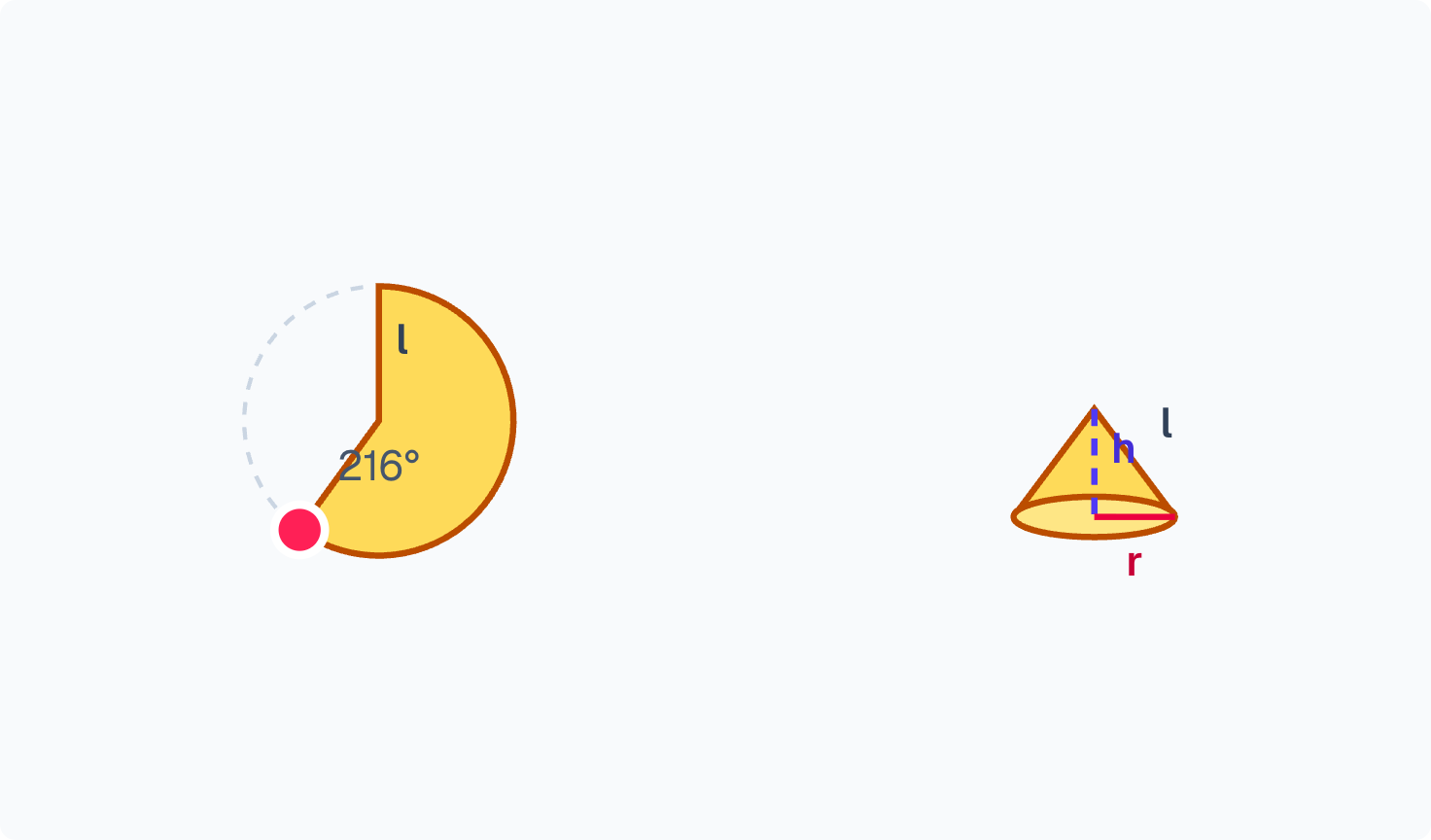
l = √(r² + h²)     Curved surface = πrl     Total = πr(r + l)
Volume = ⅓πr²h  (a third of the cylinder on the same base)
Sector of angle θ, radius l → cone with r = l × θ/360
Frustum: V = ⅓πh(R² + Rr + r²), curved = π(R + r)L, L = √(h² + (R − r)²)
Shortcut: If you forget the frustum formula, complete the cone. The cut-off top is a similar cone, so its height and radius are in the same ratio as the big one's.
Sphere and hemisphere
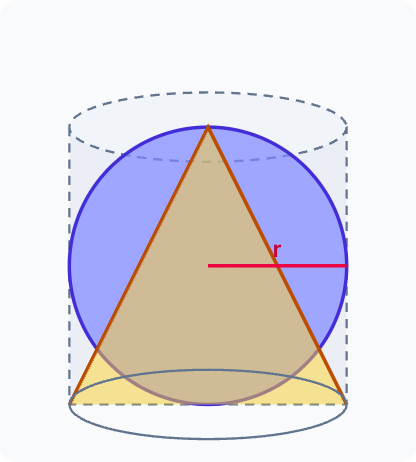
Sphere: surface 4πr²     volume ⁴⁄₃πr³
Hemisphere: curved 2πr²     total 3πr²     volume ⅔πr³
Hollow sphere (shell): ⁴⁄₃π(R³ − r³)
Melting and recasting
Volume before = volume after
Number of pieces = big volume ÷ one small volume
Sphere → n spheres: n = (R/r)³
Shortcut: Cancel before you multiply. π, ⁴⁄₃ and ⅓ usually appear on both sides of the equation, so strike them out first.
Scaling: k, k², k³
Similar solids, length ratio a : b
→ area ratio a² : b²     → volume ratio a³ : b³
Prisms, pyramids and solids inside solids
Prism:    V = base area × h     lateral = base perimeter × h     total = lateral + 2 × base
Pyramid:  V = ⅓ × base area × h     lateral (regular) = ½ × base perimeter × l     total = lateral + base
Regular tetrahedron, edge a:  V = a³/(6√2),  surface = √3 a²,  height = a√(2/3)
Body diagonal:  cuboid √(l² + b² + h²),  cube a√3
| Fit | What is shared | Result |
|---|---|---|
| largest sphere in a cube of side a | diameter = side | r = a/2; sphere fills π/6 ≈ 52% of the cube |
| cube in a sphere (corners on the sphere) | diameter = body diagonal | 2R = a√3, so a = 2R/√3 |
| sphere touching all 12 edges of a cube | diameter = face diagonal | r = a/√2 |
| largest cylinder or cone in a cube | diameter = side, height = side | r = a/2, h = a |
| sphere in a cylinder (snug) | same radius, h = 2r | volumes 2 : 3; surface = curved surface |
| largest cube in a hemisphere of radius R | top corners on the dome | a² + a²/2 = R², so a = R√(2/3) |
Formulas stick when you use them
The Mensuration: Areas and Volumes lesson has worked problems and quick checks for every formula here. Free to start.
Start free